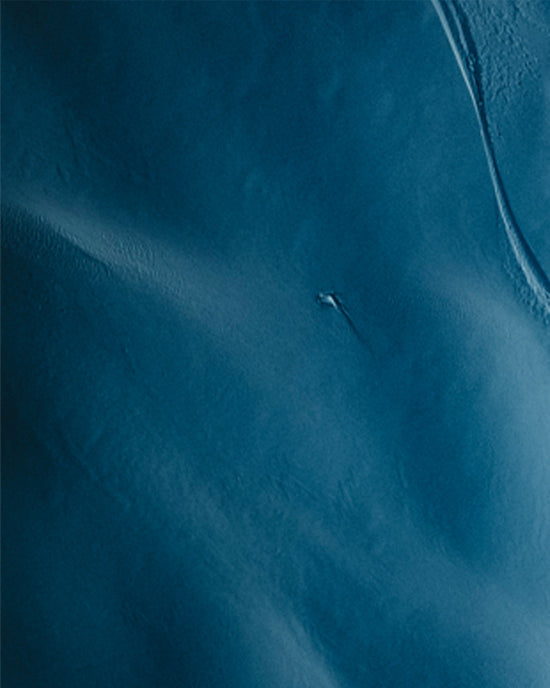
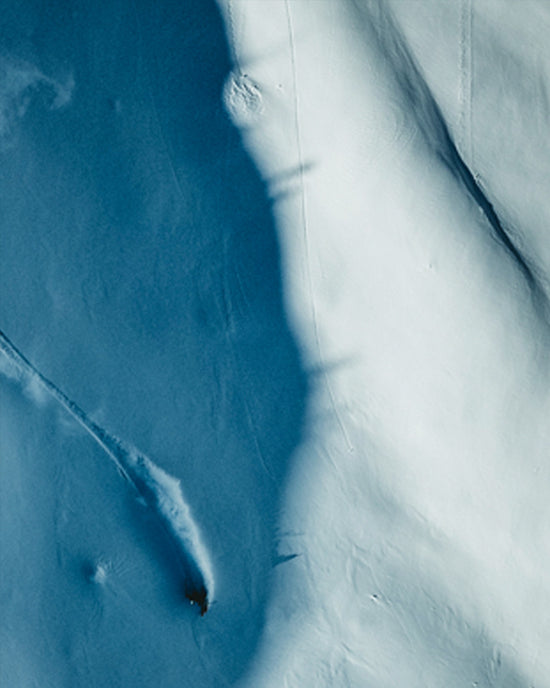
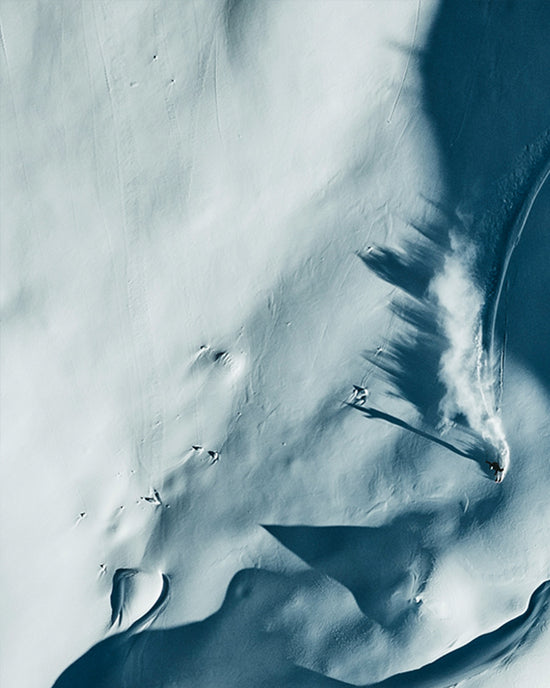




A Study in Carving
Hidden in plain sight, the timeless art of executing a perfect carving turn might just be skiing’s most underrated skill – a pure blend of balance, precision, and effortless power.
[Feature story from the Field Book Issue #002]
The Foundation
When it comes down to it, it’s simple: to turn a ski, you have to control its edge. And to control the edge, you’ll first need to find – and master – your point of balance in every direction: forward, backward, vertically, and laterally.
Once you can do that, you’ll be able to start linking turns, controlling speed, and adapting to the ever-changing snow beneath your feet. Even in deep, soft snow – which requires very different skiing technique– the ability to make a proper carving turn remains the foundation on which all skiing is built.


The Grooming Machine
In the early days, if you wanted to ski, you simply took on whatever snow the mountain offered you – fresh powder, wind-packed drifts, spring slush, or anything in between. Armed with two-metre-plus wooden skis, you adapted to the conditions of the day.
Soon, skiers began to pack the snow by sidestepping uphill, smoothing the surface to make the descents easier and more predictable. By the 1960s, the first modern snow groomers were invented. Skiing became more accessible, and attracted a wider audience, which sparked a boom in ski resorts worldwide that further fuelled the sport’s growing popularity.
It was around this time that the term “off-piste” began to be used to refer to any snow that wasn’t groomed. Ironically, as a result, powder skiing became something rare, exclusive, and highly sought after.

The Renaissance
Ever since the first snow groomers were introduced, connoisseurs, the ski media and generations of ski bums have been touting off-piste and powder as the holy grail of skiing.
However, in recent years, carving has enjoyed something of a renaissance in ski culture, and attracted more and more attention. This development has in part been a result of advances in ski design, as several producers have released more versatile carving skis that also happen to be easier to use.
On top of that, a number of high-profile professional skiers – representatives of both the freestyle world and the freeride scene – have been producing some stunning carving content. In plain terms, groomer and carving skiing have become fun and interesting again – even, dare we say, cool.


The Beauty of the Arch
Watching an expert skier link perfect carving turns together in harmony is like witnessing an outdoor ballet performance on a mountain. It’s a dance, a symphony of perfectly synchronised movements.
To execute a perfect carving turn, every part of the body needs to work together to bend the skis and make their sharp steel edges cut into the surface of the snow to form a symmetric arch. It’s a game of delicate power that demands finesse, precision and coordination – to find and create grip where you think there is none to be had.
The trick is not to use brute force, but rather to maximise your body’s potential. When it’s done correctly, the whole is far greater than the sum of the parts. The skier is propelled from one turn to the next by gravity and centripetal forces, the skis bending through each turn before shooting out into the next one – almost effortlessly.
It’s an art that can take a lifetime to master.

The Locations
Interestingly enough, despite the advances in groomer techniques and expansions of ski resorts, it’s almost as difficult to catch a freshly prepared slope with picture-perfect corduroy patterns as it is to get first tracks on a powder morning.
In the ski resort of Åre in northern Sweden, skiers are known to line up at eight o’clock in the morning, enduring the darkness and the frigid cold just to get one or two runs in before the slopes are chopped up and overcrowded.
The carving life is a bit easier in the Alps, however. For instance, there is the vast groomer playground of Italy’s Val Gardena, in the shadow of the jagged Dolomites. Or Kitzbühel in Austria, ski racing’s most hallowed ground.
In North America, places like Beaver Creek and Deer Valley serve up some of the tastiest piste skiing in the known universe. And of course, The Mountain Studio’s hometown of Zermatt offers a near-endless supply of perfect groomers in the shadow of the Matterhorn.
The real beauty of carving is that you don’t need much to enjoy it. Your local ski slope will do just fine. Just grab a pair of skis – with the shortest sidecut possible – and start arching out turns. Skiing doesn’t get much purer than that.
